
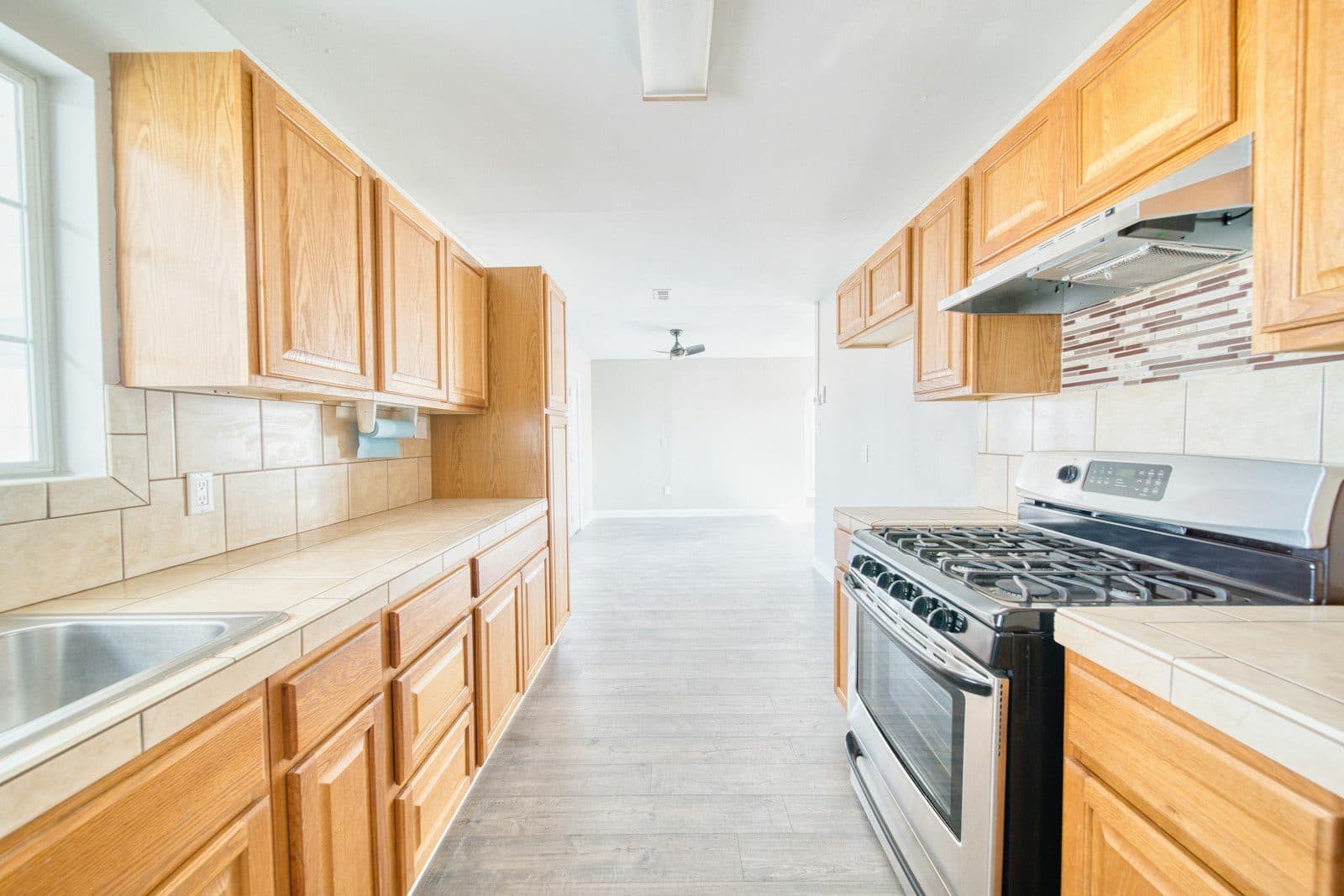
A homeowner in Charlotte is done with her oak-and-tile kitchen. One evening she asks Claude to recommend a kitchen and bath remodeler. Claude searches the web, reads what comes back and answers with a short list of names.
Getting on that list starts with what Claude finds when it searches for your trade and town. More people ask AI tools for local recommendations than a year ago:
45% of US consumers now use ChatGPT or other AI tools for local business recommendations, up from 6% a year earlier.
Source: BrightLocal Local Consumer Review Survey · (opens in a new tab)
In October 2026 we asked Claude nine buyer questions about six home service trades in four US metros, outside the Claude app. The main study holds 2,376 answers, and most figures below come from 864 of them, 36 for each city and trade. Our study of how Claude picks contractors has the method.
For the wider picture, start with our guide to AI search for home service companies.
What does Claude do before it names a company?
It searches the web: in our study, Claude searched in all 864 answers, 1,741 searches in total. Every page it cited had come back from one of them. Anthropic says Claude searches when a question benefits from current information, and that its answers then include citations.[1]
Eight of the nine questions didn't use the word "best", yet Claude searched for "best" in 605 of the 768 answers to them. "BBB" came up in 220 of its 1,741 searches, more than Houzz, Angi, HomeAdvisor, Google and Yelp together. Those are words it typed, not pages it cited.
So run that kind of search yourself: "best kitchen remodeling companies Charlotte" plus your state, then again with "reviews" on the end. Note which list pages, directories, BBB profiles and company websites come back, and whether you're on them. What Claude searches for has more.
What should your homepage say?
Your city, your services and, if customers can visit you, your street address, all as plain text. Across the whole main study, we compared two groups. One was companies Claude named in at least a quarter of a city and trade's answers, the other sites its searches found but didn't name.
- A street address on the homepage: 85 of the 97 named companies' homepages we could read, against 28 of 52 others.
- The city named in plain words: 87 of 97, against 37 of 52.
- LocalBusiness markup, code that states your name, address and phone: 69 of 97, against 29 of 52.
These are patterns, not causes: bigger companies tend to have more of everything. License numbers, insurance mentions and lists of areas served ran the other way. The full website comparison calls that a pattern in this sample, not a reason to take them off your site.
The top of the homepage for a kitchen and bath remodeler in Charlotte
- Headline: Kitchen and bathroom remodeling in Charlotte.
- Under it: Cabinets, counters, tile and walk-in showers.
- Contact block: the showroom's street address as text, next to the phone number.
- Rating, dated: 4.8 on Google from 112 reviews, as of October 2026.
- In the page code: LocalBusiness markup with the same name, address and phone.
Illustrative examplemade-up numbers · use your own
If you work from home, don't publish your home address to fit a pattern, on the page or in its code. Name your city instead, and see how to hide your home address on Google.
In the markup, use the most specific business type that fits, as Google's guide asks.[2]
Which profiles does Claude find?
BBB, Yelp and Angi, most of all, for the companies it named often. When Claude searched the web for the profiles of 88 of them, here's what came back, against the 52 sites it saw but didn't name:
- BBB: 67 of 88, against 31 of 52.
- Yelp: 63 of 88, against 27 of 52.
- Angi or HomeAdvisor: 53 of 88, against 17 of 52.
- A Google Business Profile: 0 of 88, and 0 of 52.
Like the homepage gaps, these are patterns, not causes. Google is the odd one out: none of the 6,472 citations in the 864 answers went to Google Maps or a Business Profile. Yet 350 of those answers gave a company's Google rating or number of Google reviews.
This is about Claude's links and search results. Buyers on Google Search and Maps still see your Business Profile, so keep it complete. Our post on whether Claude uses Google search has the details.
Claim or update your other profiles where the site lets you, and make the name, phone, website and services match your homepage. Don't ask for Yelp reviews, though: Yelp asks businesses not to, and says its software may not recommend reviews that seem prompted.[3]
Profiles and lists are mentions on sites you don't control, and a larger study found a similar pattern:
Web-wide brand mentions correlate far more with AI visibility than page count.
Source: Ahrefs brand visibility study · (opens in a new tab) · 75,000 brands
That's a correlation, not proof. Still, spend your next few hours on profiles and lists, not more blog posts.
Do "best of" lists matter to Claude?
They matter as a source: Claude cited a page listing several local companies in 433 of the 864 answers. Of the 773 citations to those pages, 515 went to pages from directories, lead-generation and rating sites, and 176 to contractors' own websites.
Of the 11 contractors that published list pages, 10 put their own company on the list. Don't copy them. A 2024 FTC rule bars presenting a site you control as an independent review source for a category that includes your own services.[4]
Work on lists other people publish. Check what they say about you, ask for corrections, and never buy a spot, award or not. How to get on local "best of" lists covers the rest, and who writes the lists Claude cites has the counts.
Can Claude read your website?
Usually, unless your robots.txt file or a bot blocker shuts out Anthropic's crawlers, which won't try to get past a CAPTCHA. Anthropic names three.[5]
- Claude-SearchBot reads pages for Claude's search. Anthropic says blocking it may reduce your site's visibility and accuracy in search results.
- Claude-User may fetch pages when someone asks Claude a question. Blocking it stops those fetches, which Anthropic says may reduce your visibility.
- ClaudeBot collects pages that may be used for training. Blocking it asks Anthropic to leave your future pages out of training.
Open yourdomain.com/robots.txt and look for a Disallow line under those names, or under "User-agent: *", which covers every bot. How to check if your website is blocking ChatGPT shows how to read the file.
How do you check what Claude says about you?
Ask the questions your buyers ask, with your city in them, and ask each one more than once. Leave "near me" out. In 48 of 48 answers to our "near me" questions without a city, Claude said it didn't know where the buyer was.
The Claude app can answer differently: Anthropic says Claude may use your location, inferred from your IP address, for local results.[1]
Asked the same question again, Claude named a partly different list, and the first three names held up better than the rest. Where you land matters, because most buyers compare only a few:
75% of consumers pick a local business within 30 minutes; 72% compare three or fewer.
Source: BrightLocal consumer search behavior study · (opens in a new tab)
- Write five buyer questions with your city in them, plus one that names your company.
- Ask each one twice, in a new chat each time.
- Note who's named, in what order, which pages are cited and what's wrong about you.
- Fix wrong details where they came from, then ask again next month.
Our lists of companies Claude named most often show who came up in the four metros we studied.
When the fixes run across a dozen listings and a site you can't edit, hand them off. Our AI search optimization plans fix listings and wrong facts at the source. Every month we run the same buyer questions across the AI assistants we test (currently ChatGPT, Claude and Perplexity).
The Found Sprint ($1,500 fixed) is up to 10 fixes from our report, done within 30 days once we have access and an agreed scope.
What Claude decides without you
Which companies Claude names, and in what order, is Claude's call. Anthropic's help pages explain when Claude searches and which crawlers it sends, not how it picks.
We asked Claude outside the Claude app. The app can answer differently: it may know where you are, remember earlier chats and use other settings. Other cities, trades and wordings can give other lists.
The website and profile gaps are patterns, not causes, and Claude changes over time. The pages cited here were checked on November 1, 2026.